

Take off with us and fast track your Flight Test Career:
Become a Master in Project Studies with a Thesis Project in Applied Flight Testing
Degree: Master of Science (M.Sc.) in Project Studies
Application deadline: 10.04.2026 | Program start: 15.05.2026
- Ideal for professionals
- Specialised programme in flight testing
- Internationally recognised degree
- Career advancement & top salary
- Master in 12 months
- Includes airborne training module
Tailored for ambitious professionals – including Bachelor’s graduates, certified technicians and pilots – who seek to enhance their expertise alongside a full-time employment. This fully online program leads to a recognized Master of Science in Project Studies degree and can be completed within just 12 months. A key highlight of the program is the number of case studies related to projects with a specific focus in practical flight test training.
Advance your career in projects with TRIAGON Academy and case studies adopted from EURO FLIGHT TEST. This innovative Master of Science (M.Sc.) in Project Studies combines academic depth with real-world relevance. The program is designed for engineers, aviation professionals and pilots who want to deepen their understanding of modern Science and Technology by using case studies in flight test procedures and methodologies. You will gain a solid theoretical foundation in Science and Technology and even discuss case studies in flight testing, while learning how to manage and apply technological principles effectively within the scope of complex projects.
Through hands-on training and a dedicated project phase, you will apply your skills directly in real-world projects and test environments – preparing you to lead multidisciplinary teams and manage high-stakes projects across the project aviation industry. Upon completion, you will graduate with a fully accredited, internationally recognized and Bologna-compliant Master’s degree that bridges the gap between Science and Techology resp. operational expertise and program-level project leadership.
Content
Overview
| Degree: |
Master of Science in Project Studies |
| Duration of study: | 2 semesters (12 months) |
| European Credit Transfer: | 90 ECTS credits at EQF/MQF level 7 |
| Study model: | Full-time – can be combined with work |
| Study concept: |
|
| Seal of quality: | Accreditation by the MFHEA and ACQUIN/EQAR (Category: Higher Education Programme) |
| Tuition fees: | 7.920 € plus 20.480 € for the flight test training by EFT |
What is the Master of Project Studies about?
A successful flight test project depends on more than just technical knowledge. Careful planning, clearly defined objectives, effective communication, budget awareness and strict time management are essential for success – especially in the high-stakes context of aerospace.
This Master’s program will systematically prepare you to develop research-based solutions to complex challenges in the sector of Science and Technology with a case study in flight testing by integrating knowledge from both project management and flight test operations. You will learn to make sound, autonomous decisions – even with limited data – while balancing the technical, logistical and regulatory demands of a project with a focus in flight test program. The case scenarios discussed throughout this Master of Science in Project Studies, particularly during the module Theoretica Studies in Science and Technology, the learner will:
• understand the legal framework and procedures involved in aircraft certification,
• apply flight test techniques related to aircraft performance, flying qualities, systems evaluation and human factors,
• analyze the aircraft as an integrated and complex system,
• use the working methods of a flight test engineer, test pilot and flight test project manager in a real-world operational environment,
• systematically understand and use theories and principles of project management including effective risk management,
• conduct professional research, data collection and data analysis for test result interpretation and the best possible project results,
• set goals and strategies and manage people involved in your projects,
• prepare structured and technically sound flight test reports and documentation and
• efficiently communicate the right messages to experts and non-experts alike.
What sets this Degree apart
In addition to building strong theoretical knowledge and interdisciplinary project management skills, you will have the opportunity to discuss project case studies under the guidance of EASA-certified test pilots at EURO FLIGHT TEST, Europe’s leading commercial test pilot school.
You will collect real in-flight data and learn to analyze and interpret it with engineering-level precision as part of your project. You will also train on state-of-the-art VR motion flight simulators, applying flight test techniques in a safe and controlled environment while refining your analytical, procedural and communication skills.
With its applied and hands-on focus, this program equips you to contribute your specialized knowledge to a wide range of professional contexts – whether in flight testing, aerospace systems development, certification or safety-critical operations. You will also develop the skills to assess and apply both conceptual and practical project implementation strategies, with a strong emphasis on systems thinking and operational effectiveness.
Combining theoretical depth with real-world training, this Master’s program empowers you to make professional decisions in a highly effective and efficient manner. You’ll also build a strong foundation of leadership and soft skills that prepare you for future roles in program and engineering management within the aviation and aerospace sectors.
Enroll in the Master of Science in Project Studies at TRIAGON Academy with the contribution of EURO FLIGHT TEST – and take part in shaping the future of projects in your sector, both in the air and beyond.
Expert opinion

| “This Master of Science program stands out by uniquely combining modern project management methodologies with practical experience in applied flight test operations, an essential combination that reflects the real demands of today’s aerospace industry. A core focus of the program is developing systems-level thinking across the entire aircraft, enabling graduates to plan and structure flight test projects with both technical depth and procedural precision. Designed specifically for working professionals, it offers the flexibility to study alongside a career, while providing direct, practical experience through integrated training at a certified test pilot school. Beyond earning a degree, graduates gain the applied skills and operational mindset required to contribute immediately in professional flight test environments – skills actively valued by both the aerospace industry and oversight agencies.” | |
| Peter Hemmert M.Sc. Flight Test & Evaluation M.Sc. Aerospace Engineering M.Sc. Industrial Engineering Managing Director Euro Flight Test Chief Theoretical Knowledge Instructor |
|
Expert opinion
| “This Master of Science program stands out by uniquely combining modern project management methodologies with practical experience in applied flight test operations, an essential combination that reflects the real demands of today’s aerospace industry. A core focus of the program is developing systems-level thinking across the entire aircraft, enabling graduates to plan and structure flight test projects with both technical depth and procedural precision. Designed specifically for working professionals, it offers the flexibility to study alongside a career, while providing direct, practical experience through integrated training at a certified test pilot school. Beyond earning a degree, graduates gain the applied skills and operational mindset required to contribute immediately in professional flight test environments – skills actively valued by both the aerospace industry and oversight agencies.” |
| Peter Hemmert M.Sc. Flight Test & Evaluation M.Sc. Aerospace Engineering M.Sc. Industrial Engineering Managing Director Euro Flight Test Chief Theoretical Knowledge Instructor |
Recognition and Accreditation of the Study Programme
Triagon is a Higher Education Institution with international accreditation. Our institution meets the European Standards and Guidelines (ESG).
This has been confirmed by the distinguished German accreditation agency ACQUIN, which is a full member of EQAR. The programme accreditation and the institutional accreditation were granted in full and without any conditions.
In addition, all degree programmes are accredited by the Malta Further and Higher Education Authority (MFHEA), at levels 6 (Bachelor), 7 (Master) and 8 (Doctorate) of the Malta Qualifications Framework (MQF) and the European Qualifications Framework for Lifelong Learning (EQF) respectively.
All Triagon degrees are internationally recognised and strictly adhere to the standards and requirements for higher education laid out in the Bologna Process. All study programmes offered by Triagon enable students to pursue further studies (e.g. a Master's degree or a doctorate) on an international level.


How you will learn: A Flexible, Practice-Oriented Learning Experience
Our virtual learning concept is designed to combine maximum flexibility with academic and professional depth. The program is built around a balanced mix of asynchronous online modules and interactive, live virtual seminars led by industry experts.
All courses in this Master’s program are conducted in English – the global language of aviation. Adequate English language proficiency is therefore essential for successful participation in lectures, assignments and communication within an international learning environment.
During your studies, you can expect:
• A modern online learning platform for guided self-study
• Access to an extensive digital library of academic and technical resources
• Virtual classrooms for real-time engagement with faculty and peers
• Independent project work to apply and deepen your knowledge
To complement the virtual curriculum with practical experience, students are required to participate in a one-week flight test training module at Siegerland Airport. This on-site component includes hands-on flight test training as well as flight test missions dedicated to in-air data collection, providing essential experience in planning, executing and analyzing real-world flight test scenarios. For the supervision of your flight test project or for individual coaching, you can book one-on-one appointments with your tutors at any time. This flexibility ensures that your studies adapt to your life and career – not the other way around.
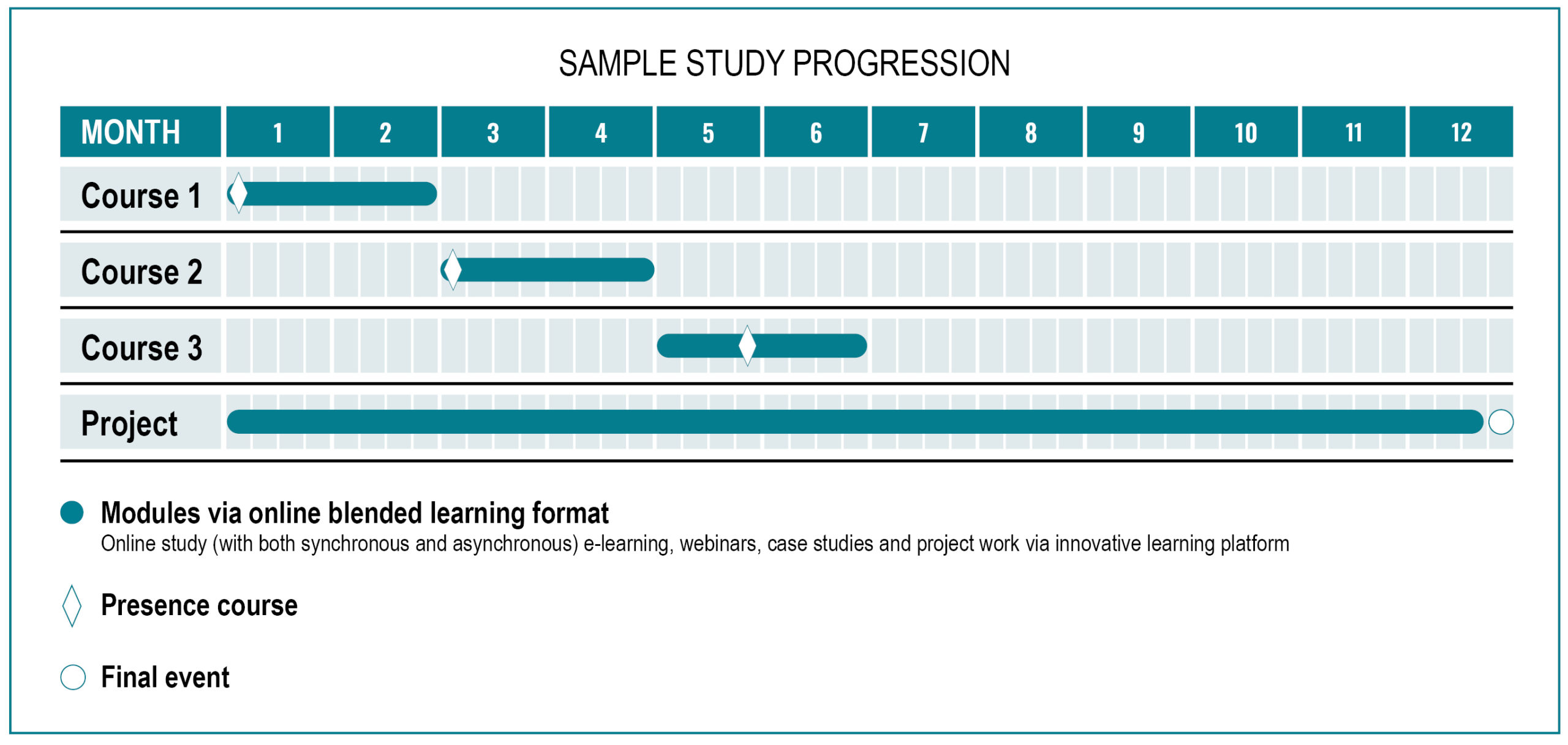
Our study concept takes into account the special requirements of current industrial and sectoral needs. A large part of the practice-oriented coursework is aimed at the application of theoretical knowledge and methods in your professional practice. We also keep an eye on your personal development. This is strengthened by learning and reflection techniques, your exchange with fellow students and your individual support. In doing so, we rely on supervision and study coaching.
In all modules, virtual classrooms and interactive teaching methods are offered via our online learning platform. In this way, you train your key competencies and deepen your professional content.
For the supervision of your project work or if necessary a personal coaching, you can arrange individual appointments with your tutors at any time . Your Master’s degree is flexible and adapts ideally to your life.
If you have any questions, please feel free to contact our student advisory service at any time – we will help you!
Course of Study and Contents
This program includes three taught modules that you complete one after the other. As part of your studies and in order to successfully complete the study program, you will need to independently plan, develop and execute a project within the field of flight testing.
You will receive your flight test project topic from EFT at the very beginning of your studies. If you register early, you may have the opportunity to select your preferred topic from a pool of flight test specific subjects based on your individual interests. If you are already involved in a specific flight test project or are expected to contribute to one, this project – subject to technical suitability – may also be recognized as your Final Project.
In the first module you will explore the tehehoretical principles of Science and Technology using case studies of Applied Flight Testing. This module provides the flight test engineering and flight test management foundations you need to successfully launch and further develop your project.
In the second module, you conceive, design and carry out a substantive, original independent empirical research to design and evaluate the feasibility of your flight test project. This module shall provide you with the necessary knowledge, skills and competencies to autonomously transform research elements into practical ones.
The third module is based on current international developments in the field of project management and implementation. This module will enable you to acquire the
necessary knowledge, skills and competencies required to manage and implement a specific project by applying the core principles of project management and implementation.
Based on the results of the three modules you will implement your individual Flight Test Project. You will be expected to take a holistic approach – considering every relevant dimension.
The total learning hours for this programme are as follows: (i) Contact hours—160; (ii) Supervised hours—40; (iii) Self-study hours—2010; (iv) Assessment hours—40.
Basic skills that you acquire in the Master in Project Studies
Basic skills that you acquire in the Master in Project Studies
- Professional and action research, presentation & discussion of views, trends & possibilities
- Application of various models for the planning & development of practical or conceptual projects
- Competent use of communication media (especially digital channels to promote projects)
Your modules:
1. Theoretical Studies in Science and Technology
You will explore the theoretical principles of Science and Technology and suppliment the knowledge and skills through case studies in Applied Flight Testing. This module provides the flight test engineering and flight test management foundations you need to successfully launch and further develop your project. Below are some of the case study tipics which will be discussed as part of the Theoretical studies in Science and Technology:
• EASA regulatory framework and Certification Specifications
• Flight test management
• Certification, engineering and operational requirements definition
• Test Hazard Analysis (THA) and risk management
• Aircraft system safety assessments
• Aerodynamics for flight testers
• Air data calibration testing
• Aircraft performance testing
• Aircraft stability and control testing
• Aircraft dynamics testing
• Modern flight control systems
• Radio and navigation systems testing
• Human factors and workload assessment testing
• Flight test instrumentation and data analysis
Based on this foundation you will develop a comprehensive project proposal that outlines all essential methodical, procedural and organizational aspects of your planned flight test project. In the subsequent modules, all aspects will be further refined, planned and documented using established research methods and project management methodologies.
The module learning outcomes are:
- Systematically creates a research-based diagnosis to problems by integrating theoretical knowledge pertaining to the field of Science and Technology from new or interdisciplinary fields and makes judgements with incomplete or limited information;
- Demonstrates autonomy in the direction of learning within the field of Science and Technology and foster a high level of understanding of the overall learning processes at Master level;
- Autonomously develop learning skills in the field of Science and Technology and their corresponding theoretical frameworks to allow continuation to study in a manner that may be largely self-directed or autonomous.
Assessment: Bibliography list including critical synthesis [20%]; Research Essay [80%]
The total learning hours for this programme are as follows: (i) Contact hours—50; (ii) Supervised hours—0; (iii) Self-study hours—190; (iv) Assessment hours—10.
2. Advanced Research Methods
In this module you will develop a substantive, original independent empirical research design for your individual flight test project. This module shall provide you with the necessary knowledge, skills and competencies to transform research elements into practical ones when you implement your “Final Project”. Your learning objectives:
• Evidence-based Practice
• Developing research questions and research designs
• Quantitative and qualitative research methods
• Statistical Data Analysis
• Qualitative Content Analysis
The module learning outcomes are:
- Demonstrates advanced research knowledge that include reflecting on social and ethical responsibilities related to the research methodologies employed throughout the study;
- Autonomously communicate core components of research methods pertinent to the study being undertaken to both specialist and non-specialist audiences and draw conclusions on the strengths and weaknesses of research model employed;
- Systematically performs critical evaluations of research method frameworks with incomplete or limited information to address research problems in a new research environment;
- Autonomously develops new research skills in response to emerging knowledge and techniques, including the use of research software and demonstrates extreme proficiency within the study contexts.
- Creatively design and properly apply the best research methods in the area of Science or Technology Humanities, Social Sciences or Economics (depending on the field of study/project the learner chooses to focus) and analyse and interpret the findings in order to produce a systematic research report;
- Describe comprehensively theories and apply practical experience of techniques in the specific domain of the project.
Assessment: Outline of project proposal [10%]; Annotated Bibliography [20%]; Final project proposal[70%]
The total learning hours for this programme are as follows: (i) Contact hours—50; (ii) Supervised hours—0; (iii) Self-study hours—190; (iv) Assessment hours—10.
3. Project Implementation Management
This module focuses on current international developments in the field of project management and project implementation. Your learning objectives:
• Core principles of project management
• Methods and tools for project management
• Agile project management
• Stakeholder analysis
• Project risk analysis and risk mitigation
• Project documentation
The module learning ourcomes are:
- Systematically manage complex research work that will affect project implementation and autonomously take reasoned actions and decision when complex issues pertaining to the study require a new strategic approach;
- Autonomously take responsibility for contributing towards implementation of a study project and strategically review elements such as uncertainty, risk, intercultural differences, and time pressure in realistic project management and implementation situations;
- Systematically deal with strategic performance of a tema when managing and implementing a project, such as restricted financial resources, permits, ethical consideration, perception etc.
- Reflect on their decision-making in uncertain circumstances which could jeopardize the overall implementation of a project and derive actions for future decisions.
Assessment: submission of time plam [20%]; submission of mitigation plan for project [20%]; reflective journal [20%]; joint research essay [40%]
The total learning hours for this programme are as follows: (i) Contact hours—50; (ii) Supervised hours—0; (iii) Self-study hours—190; (iv) Assessment hours—10.
4. Your Final Project
Based on the results of the three modules you will implement your individual Flight Test Project. You will be expected to take a holistic approach – considering every relevant dimension
• Technological requirements and associated risks
• Applicable certification or operational requirements
• Available project resources, roles & responsibilities
• Master Test & Evaluation Plan
• Verification and compliance strategies
• Scope and methodology of the test execution
• Data collection, processing and analysis techniques
• Structure, objectives and expected outcomes of your final report
The result of your work after 12 months is a detailed and evaluated Master Test & Project Plan.
The learning outcomes of the final project module are:
- Demonstrate self-direction when developing and implementing a specific project and deploy originality and constructive criticism when capitalising on what other project developers have previously achieved through their approach;
- Comprehensively demonstrate knowledge on the theoretical framework which the learners employ on their project and be self-critical of the model implemented;
- Systematically demonstrate competency in researching topics related to chosen project and manage the project along a defined time scale towards completion;
- Deploy originality in developing a project development methodology.
Assessment: project [80%]; reflective journal [20%]
The total learning hours for this programme are as follows: (i) Contact hours—10; (ii) Supervised hours—40; (iii) Self-study hours—1440; (iv) Assessment hours—10.
The Project
As part of your project, to sharpen your planning skills as a flight test manager, you will complete a practical flight test training at EFT – Europe’s leading commercial test pilot school. This training demonstrates the execution of specific test maneuvers required for collecting real-world flight test data in the context of certification. As part of this module, you will conduct airborne testing focused on
• aircraft performance,
• stability & control,
• dynamic system behavior,
• communication and navigation.
As part of the project hands-on phase, you will complete 8 flight test missions at Siegerland Airport (Germany), the base of EFT. Each mission follows the professional cycle of briefing, flight, debriefing and data analysis, enabling you to consider, select and implement suitable flight test methods based on the specific requirements of your individual project – or, depending on the task, to collect relevant data for your Final Project.
Training is delivered by experienced EFT test pilots and is further supported by sessions on cutting-edge VR motion simulators, where you will learn how to integrate this technology into modern flight test planning. During the simulator sessions, you will take on both roles: acting as the Lead Flight Test Engineer, directing the flight via telemetry from the ground, and as the Test Pilot. This shift in perspective will broaden your understanding and enable you to consider the responsibilities and interactions of all key roles within a professional flight test program.
Upon completion of both the in-flight and simulator training, you will have a solid understanding of
• the technical and organizational resources required to conduct flight tests,
• the qualifications and responsibilities of test crews involved,
• the time and effort needed to plan, execute and analyze a flight test,
• the operational procedures essential to safe and effective flight test execution,
• the evaluation methodologies used to assess aircraft in flight for certification purposes
For students starting the program in November, the flight test training is scheduled for March/April. Students beginning in May will complete their training in August/September.
Expect a challenging – yet rewarding – week of scientific and practical engagement in flight testing.
Target group and personal requirements
Would you like to know whether the Master in Project Studies is a good fit for you? The following characteristics are helpful prerequisites for your studies with us:
You identify yourself with responsible activities
- You are passionate about leadership tasks, problem identification & decision-making
- You have good self- and time management
- Organization is your strength
- You are open to learning through self-reflection, analysis, feedback & supervision
- Your English skills are at a good level (globalized working environment)
The Master in Project Studies is a consecutive course of study for Bachelor graduates. But a lateral entry is also possible – if you have another degree or professional experience, just contact us.
Your Studies with TRIAGON – as flexible as your Life
This degree program is designed for working professionals and takes your limited availability for fixed schedules into account. You can study from home or from anywhere in the world. All course materials are available online at any time, complemented by live tutorials and an on-site practical week for your flight test training and test campaign.
Your Future Prospects as a Graduate
With its strong combination of project management expertise and flight test specialization, this Master’s degree opens up outstanding career opportunities – especially in the aerospace and aviation industries, where structured test programs and certification-driven development cycles are critical to success. Graduates of this program are well equipped to take on responsible roles in technical project leadership, system testing and development coordination.
Career Opportunities & Salary Prospects
Thanks to the strong project management foundation and with hands-on experience, graduates are well prepared to pursue careers as
- Project Manager Aerospace Systems, managing teams across development, integration, testing and validation of aircraft systems
- Test Program Manager, overseeing the lifecycle of a test program, including resource planning, regulatory compliance and team leadership
- Systems Integration Manager, ensuring that aircraft systems function coherently during test and certification phases
- Certification Program Coordinator, supporting compliance with EASA/FAA requirements, managing documentation and test verification
- Regulatory Affairs Officer, working with authorities and manufacturers on certification processes
The salary prospects for graduates of a Master of Science in Project Studies with a Specialization in Applied Flight Testing are generally very strong, due to the unique combination of high-demand technical specialization and project leadership competencies. Flight test professionals enjoy excellent career prospects and competitive salaries across global aerospace markets. Entry-level specialists typically earn 60.000-85.000 € in Europe and 70.000-115.000 $ in the US and Canada. With experience and professional advance into leadership roles salaries range from 90.000 € to more than120.000 € in Europe and from 120.000 $ to 150.000 $ or more in North America.
Tuition Fee and Payment Schedule
The tuition fees for the TRIAGON program are 7.920 € which can be paid monthly.
EURO FLIGHT TEST will also charge its own fees for the technical support of the study program and for the one-week flight test training at Siegerland Airport in Germany.
Important:
You can only study the “Master of Science in Project Studies – Applied Flight Testing” if you also take part in the EFT program with in-person flight test training (https://www.euroflighttest.com/master-of-science). Otherwise, click here.
Admission Requirements
For admission to the Master of Science in Project Studies the Maltese regulations apply:
• An MQF/EQF level 6 full qualification in a relevant science or technology discipline obtained from a recognized University/College/Institute or
• an MQF/EQF level 6 professional qualification (Bachelor Professional) in a relevant field such as the German “Staatlich geprüfter Techniker” or “Meister” or
• equivalent professional experience.
• Applicants who are not native English speakers are required to provide evidence of English fluency equivalent to an IELTS of 6.
New career opportunities for military and commercial pilots:
The admission on the basis of practical professional experience is particularly interesting for Pilot License Holders. Applicants who do not hold an EQF Level 6 qualification, but possess one of the following pilot licenses may qualify for admission through an individual pre-assessment process conducted by EURO FLIGHT TEST:
• Commercial Pilot License (CPL)
• Airline Transport Pilot License (ATPL)
• Military Pilot License (MIL)
This pre-assessment includes an online interview to assess the applicant’s professional background and suitability for the program. Upon successful completion, EURO FLIGHT TEST will issue a formal recommendation for admission to TRIAGON Academy. A fee of € 380 including tax applies for the pre-assessment process.
Review of your Eligibility & Contact
We are happy to review your admission documents free of charge and without obligation. Please don’t hesitate to contact us via email at
info@triagon.mt
Interested in the flight test part of the program, wondering about eligibility as a professional pilot or ready to register? Just drop us a line at
master@euroflighttest.com
We’re happy to support you!
FAQ: Frequently asked questions
What exams are required?
As a rule, the focus is on a practical work (project, case study, etc.) including a written assignment. Typical forms of examination are presentation, documentation (e.B. Learning portfolio), the report, the term paper or the project portfolio and reflective journal.
If you are studying part-time, we make sure that you can relate to your professional practice. In addition, your personal commitments will of course be taken into account in the extent of your written work.
Does a Master’s degree entitle me to take up a doctorate?
Yes, after successfully completing the Master’s degree in Project Studies , you can start your studies as a Doctor of Business Administration (DBA).